Three Days at C2C: Inside the Content Machine at The O2
How Forever Callie Media Captured One of the Biggest Weekends in UK Country Music
There are some events you cover, and then there are some events you have to survive. C2C at The O2 is one of them.
For one weekend every year, London becomes the centre of the country music world this side of the Atlantic. Artists, managers, media teams, brands, radio, fans and industry figures all descend on one building with one shared goal, to be part of the biggest country music event in the UK. It is loud, fast, relentless and brilliant in equal measure. It is a festival, a trade floor, a fan convention, a live music marathon and a social media machine all at once.
And if you’re there to create content, you don’t really stop moving.
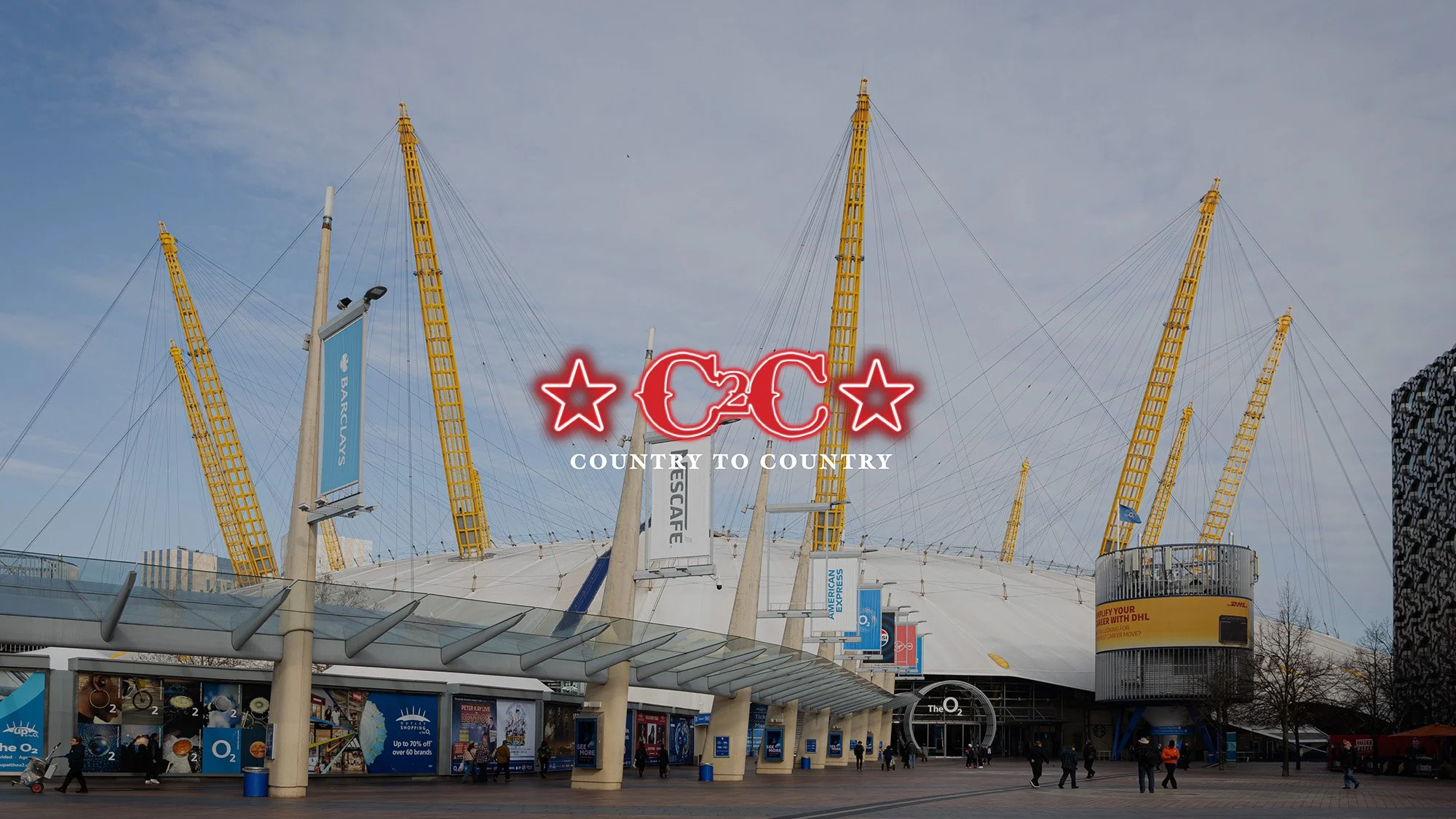
This year, we arrived at C2C not just as attendees, but with a clear job to do. Officially, we had been contracted by the Song Suffragettes, who were hosting a show in the Blue Room across the weekend. That alone felt significant. Their round was one of just two songwriter rounds across the entire festival, which made it not just another performance slot, but a genuine focal point for people who care about songwriting in its purest form. In a festival environment built on scale and spectacle, that kind of intimacy matters.
But like all good festival jobs, what started as one brief quickly became many.
Friday Begins Before the First Note
The first day was never going to be easy.
Friday was built around volume. The task in front of us was simple in theory and exhausting in practice, interview as many female artists as possible for the Song Suffragettes social channels, building a major library of content that could live well beyond the weekend itself. This wasn’t about grabbing a few clips for the sake of it. This was about building a bank of meaningful, usable material that could continue serving the brand long after the stages had gone dark.
Working alongside Madeline of Phoenix FM, we moved through the festival at pace, threading our way through the crowds, schedules, artist movement and backstage timings to get as much done as possible. Anyone who has worked in a festival environment knows that timing is everything. Artists are pulled in multiple directions. Spaces change. Slots move. Access narrows and opens without warning. You have to be prepared, flexible and fast, without ever making it look rushed.
By the end of the first day, we had worked our way through nearly the entire festival from an interview perspective. And that was just day one.
That’s the thing about C2C. One day there feels like three everywhere else.
In the Middle of the Chaos, a Cup of Tea with Russell Dickerson
As if that wasn’t enough, we were also back working with Fort Nash on a completely different kind of brief.
Where the Song Suffragettes work demanded speed, consistency and scale, Fort Nash brought something more playful. Their project centred on Russell Dickerson, filmed while being interviewed over tea by a five-year-old. It sounds ridiculous on paper, and that’s precisely why it worked. In a weekend saturated with polished press content and standard media moments, something like that has real power. It cuts through. It disarms. It gives people a reason to stop scrolling.
And that’s before you even get to the portrait of Saturday night’s headliner.
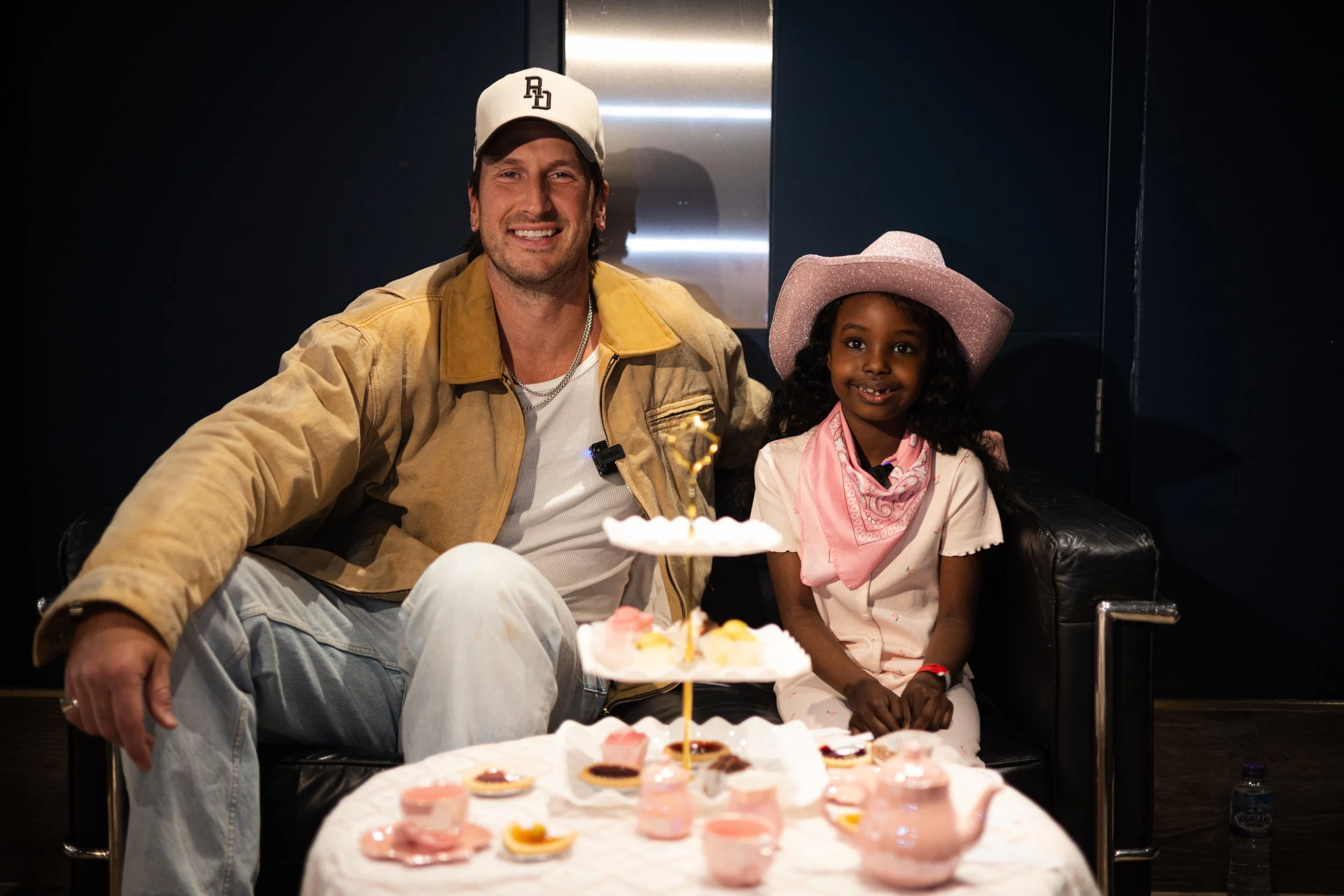
What made this particular job so enjoyable was how well-planned it was. Fort Nash had already done the groundwork. They knew what they wanted, where they wanted it, and how it needed to feel. Our role was simply to execute. There was no editing requirement, no complex post-production turnaround hanging over us. They just wanted the raw files, captured properly and delivered clean. In the middle of a weekend defined by pressure and pace, that kind of clarity feels like a gift.
It was one of those rare festival jobs where the simplicity actually makes it stronger.
Emily Ann Roberts and the Post That Changed Everything
Some moments at a festival feel important while you’re in them. Others reveal themselves afterwards.
For us, one of the defining moments of the weekend came with Emily Ann Roberts.
She had just performed on the BBC Radio 2 Stage at Indigo at The O2, and the energy around her was obvious. Some artists leave a stage and the atmosphere settles. Others leave a stage and the atmosphere follows them out. Emily was the latter. There was momentum around her, and you could feel it in real time.
We captured her just after that set, knowing it mattered, but not quite knowing what it would become.
When the content went live, it took off. Not just “did well.” Not just “nice engagement.” It became the most liked post Forever Callie Media has ever published. For a team that spends its life creating, posting, editing and trying to make content work hard, that was a huge milestone. One of those markers that reminds you not just that something landed, but that people are paying attention.
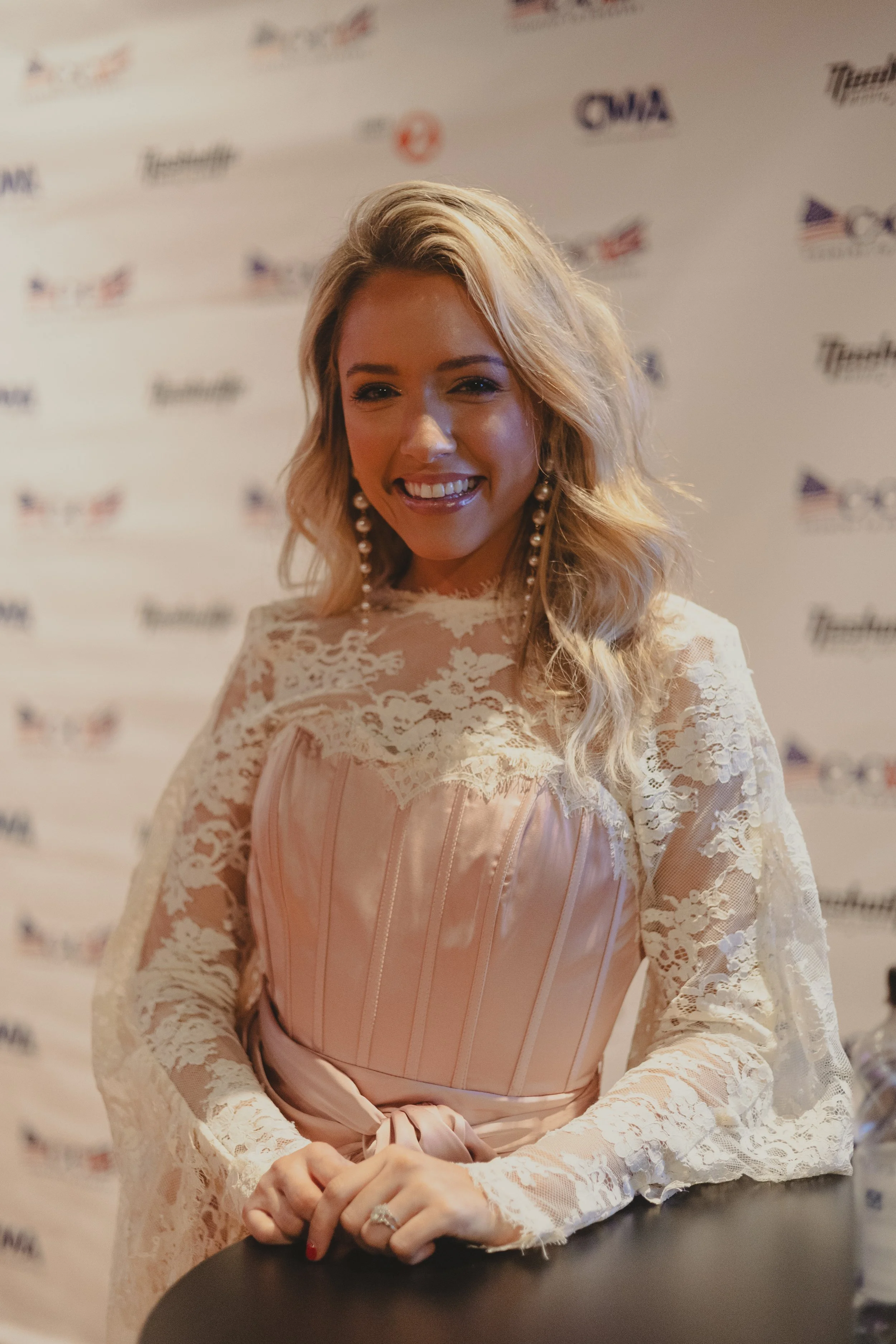
Later that same day, Emily performed on the Spotlight Stage. Great slot, strong audience, plenty of energy. But honestly? She felt bigger than the billing. Some artists don’t look like they’re on their way. They look like they’ve already arrived and the stage just hasn’t caught up yet. That was Emily. The kind of performer you watch and immediately think: headliner, eventually.
Possibly sooner than people realise.
Sunday Belonged to the Song Suffragettes
If Friday was about pace and Saturday was about momentum, Sunday was about purpose.
The Song Suffragettes show in the Blue Room felt special long before the first song began. Partly because of the history behind the brand and what it stands for, and partly because of how rare that format was within the context of the wider weekend. In a festival full of noise, lights, queues, movement and oversized moments, there is something powerful about a songwriter round. No distractions. No overproduction. Just songs, stories and the people delivering them.
This year’s round brought together Hannah McFarland, Maya Lane, Georgia Ku and Alyssa Flaherty, and they were extraordinary.
What makes a round like that work is not just talent, although there was plenty of that. It’s chemistry. Timing. The willingness to let a song breathe. The confidence to strip everything back and trust the writing to hold the room. That’s exactly what happened. It was warm, honest, sharp in places, emotional in others, and completely absorbing throughout.
And yes, the rendition of The Climb may well have been one of the standout moments of the entire weekend.
Not because it was big. Because it was right.
The Festival Beyond the Brief
Of course, C2C is never just one stage, one job or one artist.
The hours between formal briefs have a habit of filling themselves. You look up and suddenly you’re shooting someone you’ve wanted to work with for ages, catching a performance you didn’t expect to be so strong, or crossing paths with people you know you’ll be working with again soon.
That happened repeatedly over the weekend.
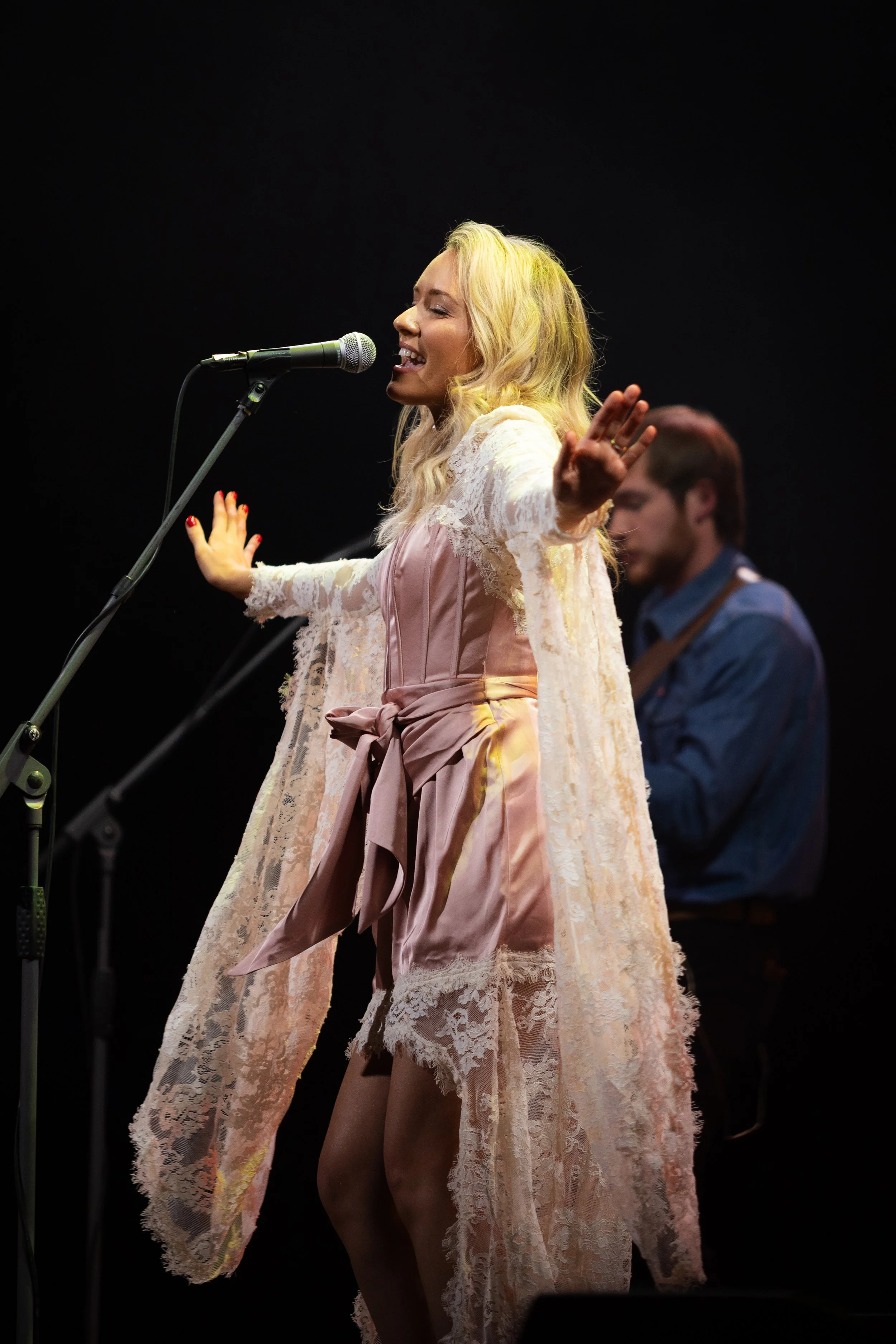
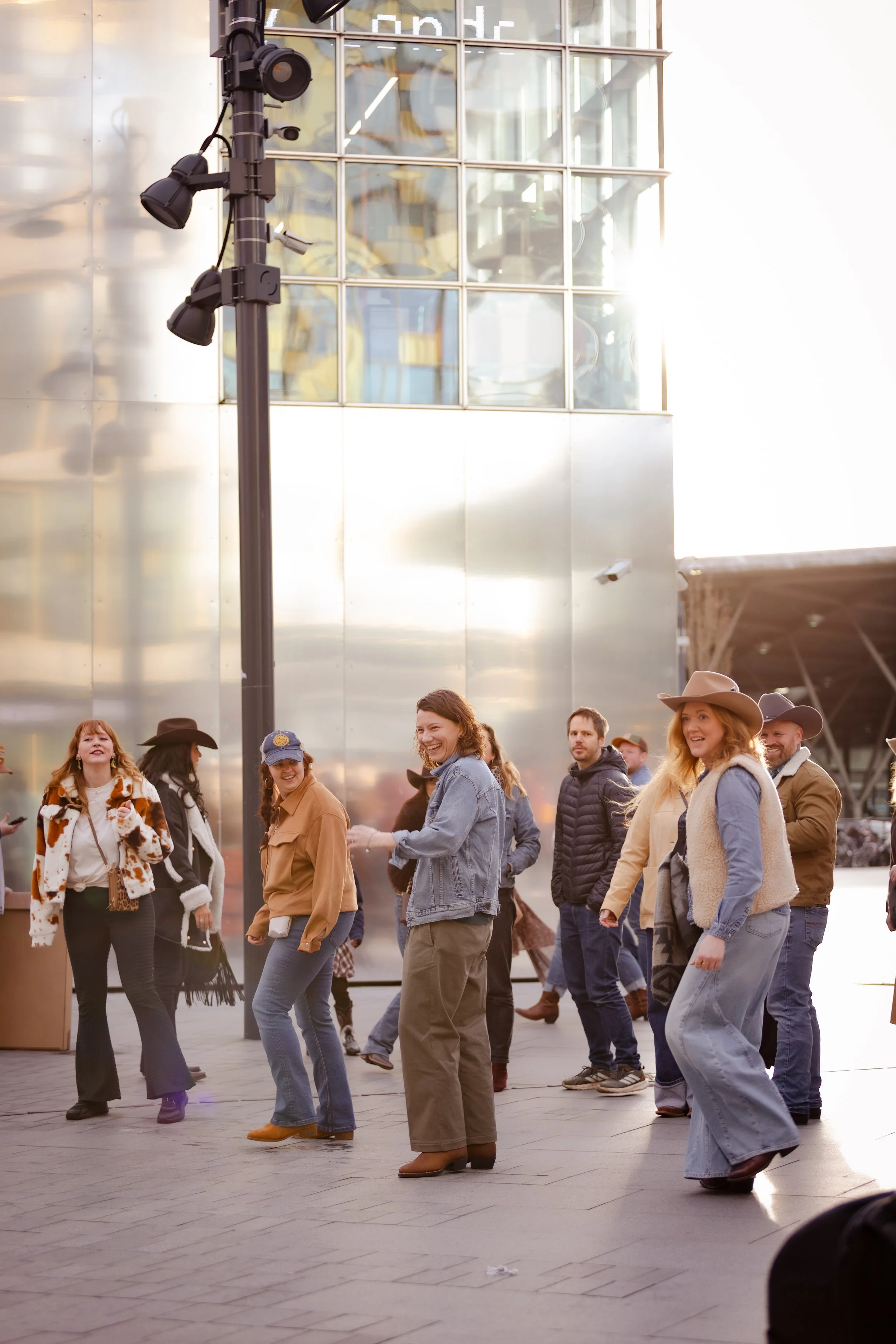
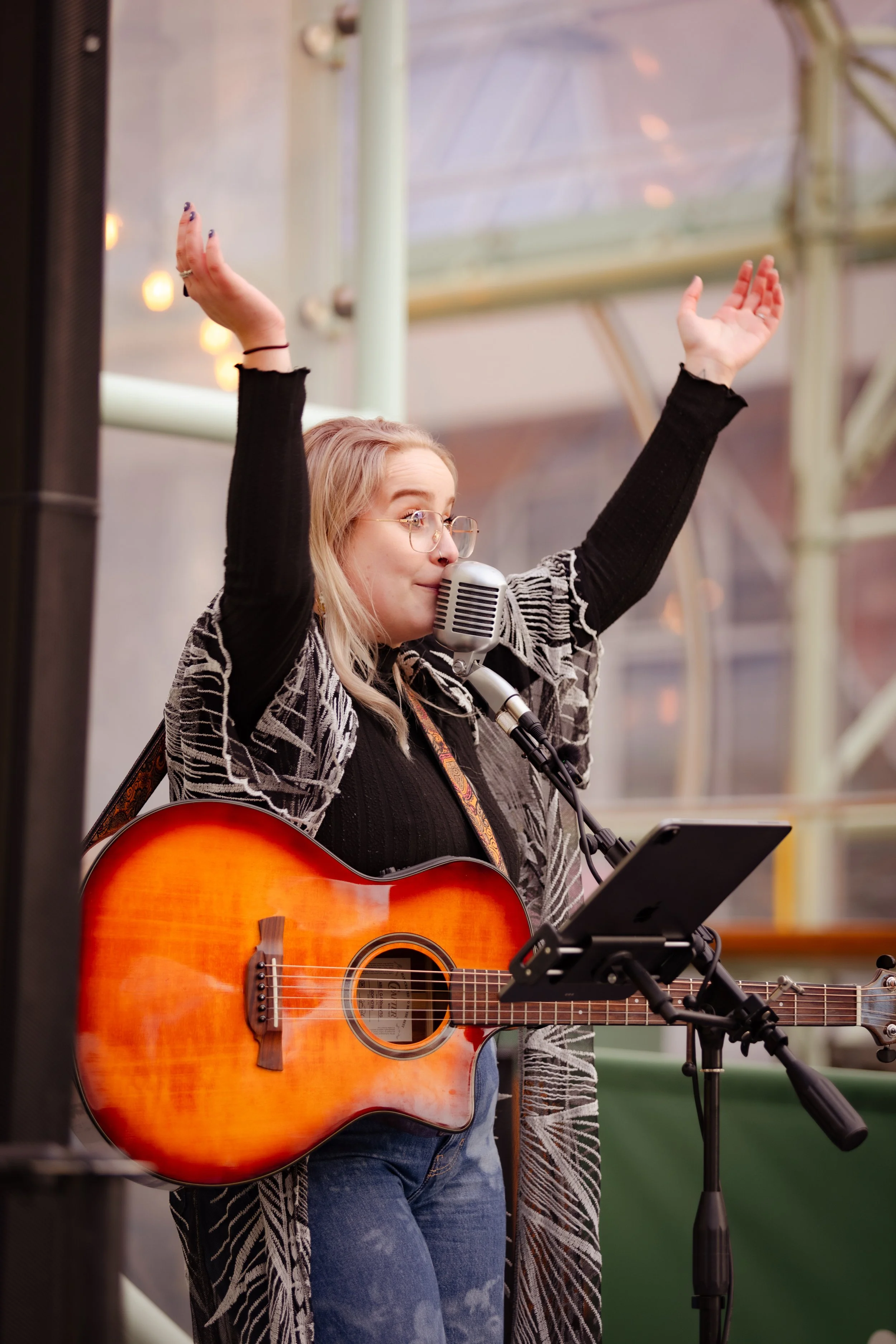
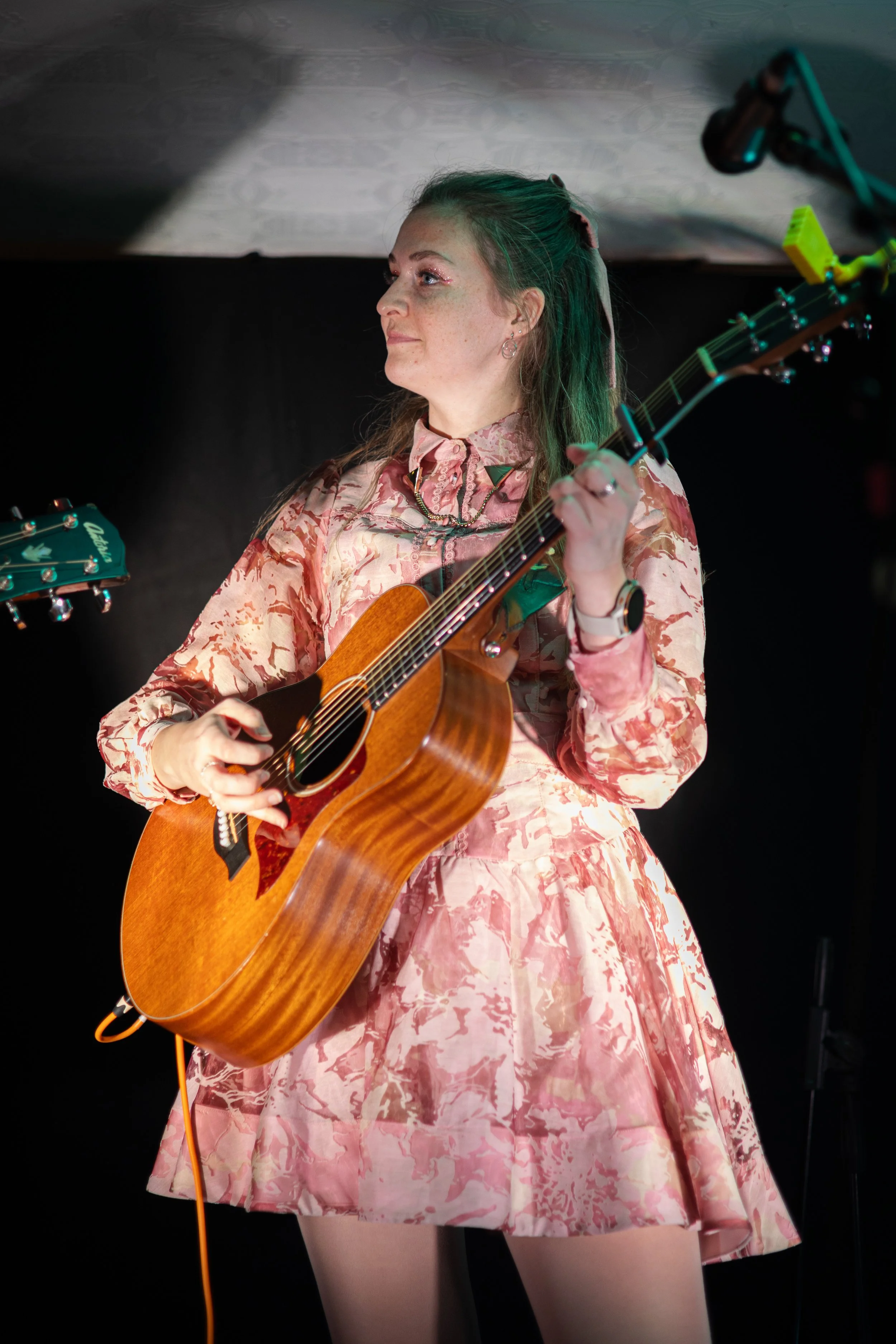
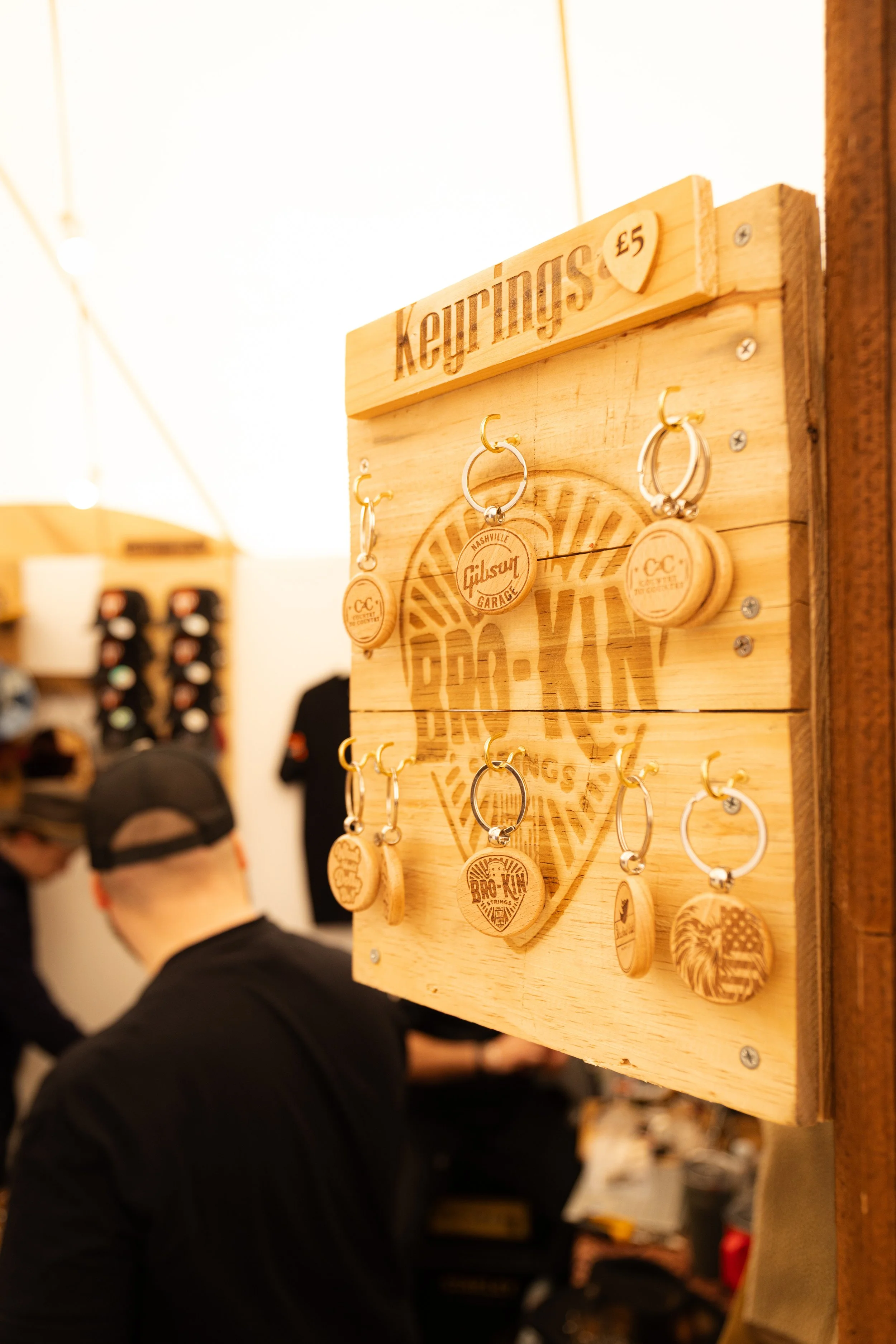
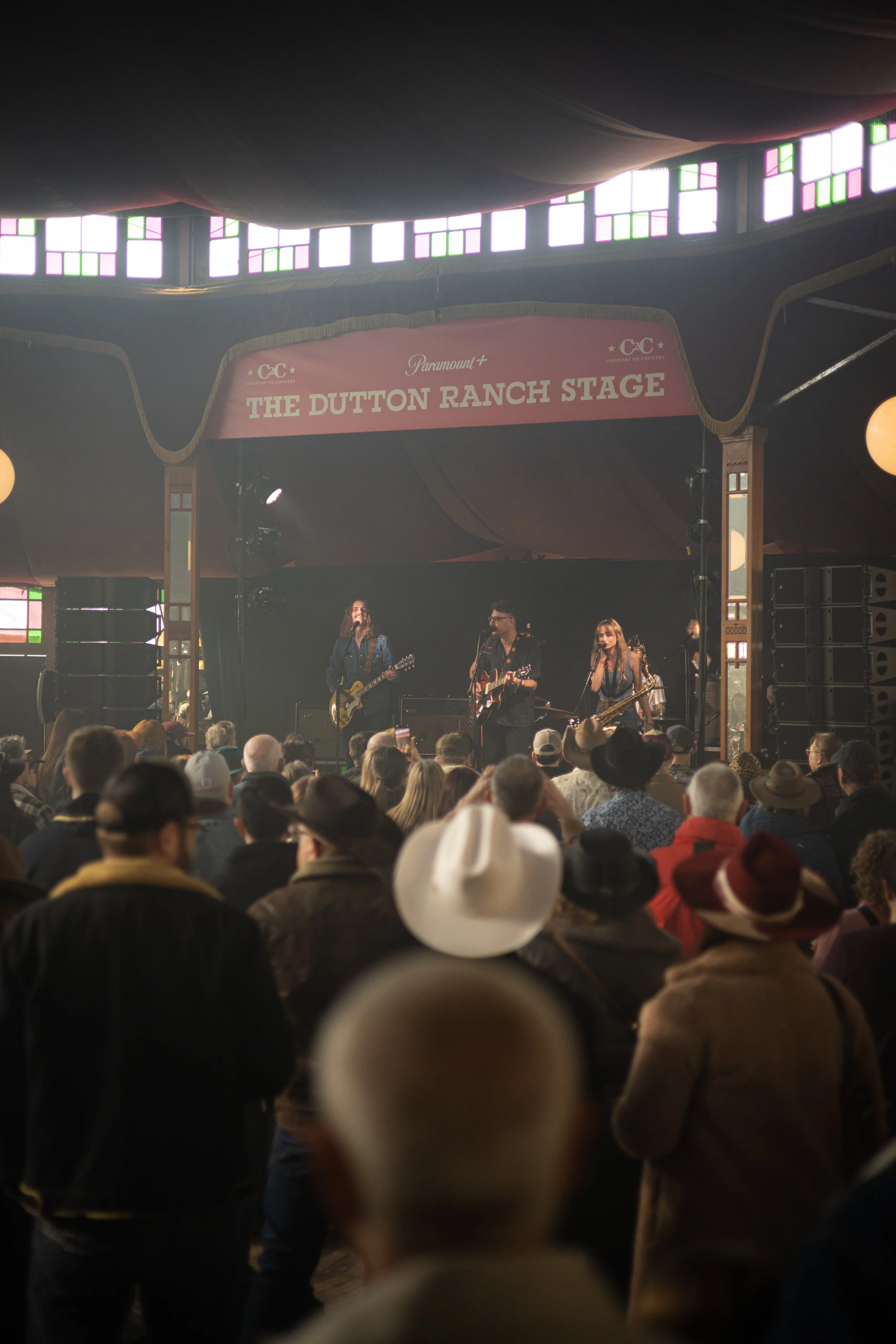
We caught Jonny Morgan and the Moral Support, now out on tour and sounding every bit like a band with serious momentum behind them. We spent time around Rhiannon Paige, who we’re excited to begin working with in the coming weeks. We also had to see our amazing friend Louise Parker play to the packed out Observatory. We also saw the fantastic team at Bro-Kin Strings Jewellery, another reminder that festivals like this are never just about artists and stages. They are ecosystems. Brands, creatives, stylists, media, radio, fans, venues, they all feed into the culture that makes a weekend like C2C what it is.
That’s why covering it properly matters.
You’re not just documenting performances. You’re documenting a scene.
What Content Creation Looks Like at This Level
From the outside, event content often looks straightforward. A few cameras. Some interviews. Some photos. A reel or two. But at a festival like C2C, content creation becomes a very different kind of discipline.
It becomes about endurance. About judgment. About knowing when to chase a moment and when to stay put because a better one is coming. It becomes about understanding what each client needs, what each platform demands, and what each piece of content is actually for.
Because there is no single audience at an event like this.
The content created for Song Suffragettes has a different purpose from the work delivered for Fort Nash. Artist coverage behaves differently again. Some moments are for immediacy. Some are for archive. Some are designed to drive conversation. Others exist to build credibility, authority or identity over time.
That is what makes a weekend like this so creatively demanding. You are not just shooting what happens. You are constantly making decisions about what matters, how it should look, and where it will live next.
Done badly, it becomes noise.
Done well, it becomes infrastructure for an artist, a brand or a platform to keep building on.
Why Weekends Like This Matter
C2C is one of the few places in the UK where the full scale of country music becomes impossible to ignore. The fans are there, the appetite is there, the artists are there, and the standard keeps rising.
To be in the middle of that, working across multiple briefs, capturing multiple stories and producing content that actually performs, is more than just a busy weekend. It’s proof of concept. Proof that the work holds up in the biggest rooms, under the most pressure, with the fewest second chances.
And that matters.
Because the best content work is never just about one post, one reel, one photo or one festival recap. It is about building momentum. Building visibility. Building identity. Giving artists and brands material that continues to work once the weekend is over and the stages are packed down.
That is what we were there to do.
And by the end of the weekend, exhausted and still moving, it felt like we had done exactly that.
After the Lights Go Down
By the time Country to Country Festival ends, London starts to feel strangely quiet again.
The wristbands come off. The gear gets packed. The backlog begins. People head home with aching feet, overloaded camera rolls and stories they’ll be telling for months. The artists move on. The brands regroup. The fans start posting their favourite moments.
And for a second, it feels like it’s over.
BUT IT ISN’T!
Because while C2C might be the biggest stage, it’s not the only one.
Every week, across the UK, country music is still happening. Still growing. Still building.
It’s in rooms like The Country Cafe, where artists are connecting with audiences up close. It’s in places like 45 Vinyl, where music lives beyond the mainstream. And it’s in venues like Lil Nashville, where the energy of the scene carries on long after the festival lights go down.
These moments don’t have the scale of The O2. But they matter just as much. Because this is where careers are built. Where audiences grow. Where songs are tested, refined and felt properly.
C2C is the spotlight.
But the scene lives in the shadows between those big moments. And that’s why the content matters. Because the interviews, the portraits, the live coverage, they don’t just document a weekend. They support something ongoing. Something that needs consistency, visibility and belief all year round.
For us, that’s the point.
Not just to attend the biggest events. Not just to capture the loudest moments. But to support the scene in between. Because when it’s done properly, it doesn’t stop when the lights go down.
It carries on.